Table of Contents
Loading image...
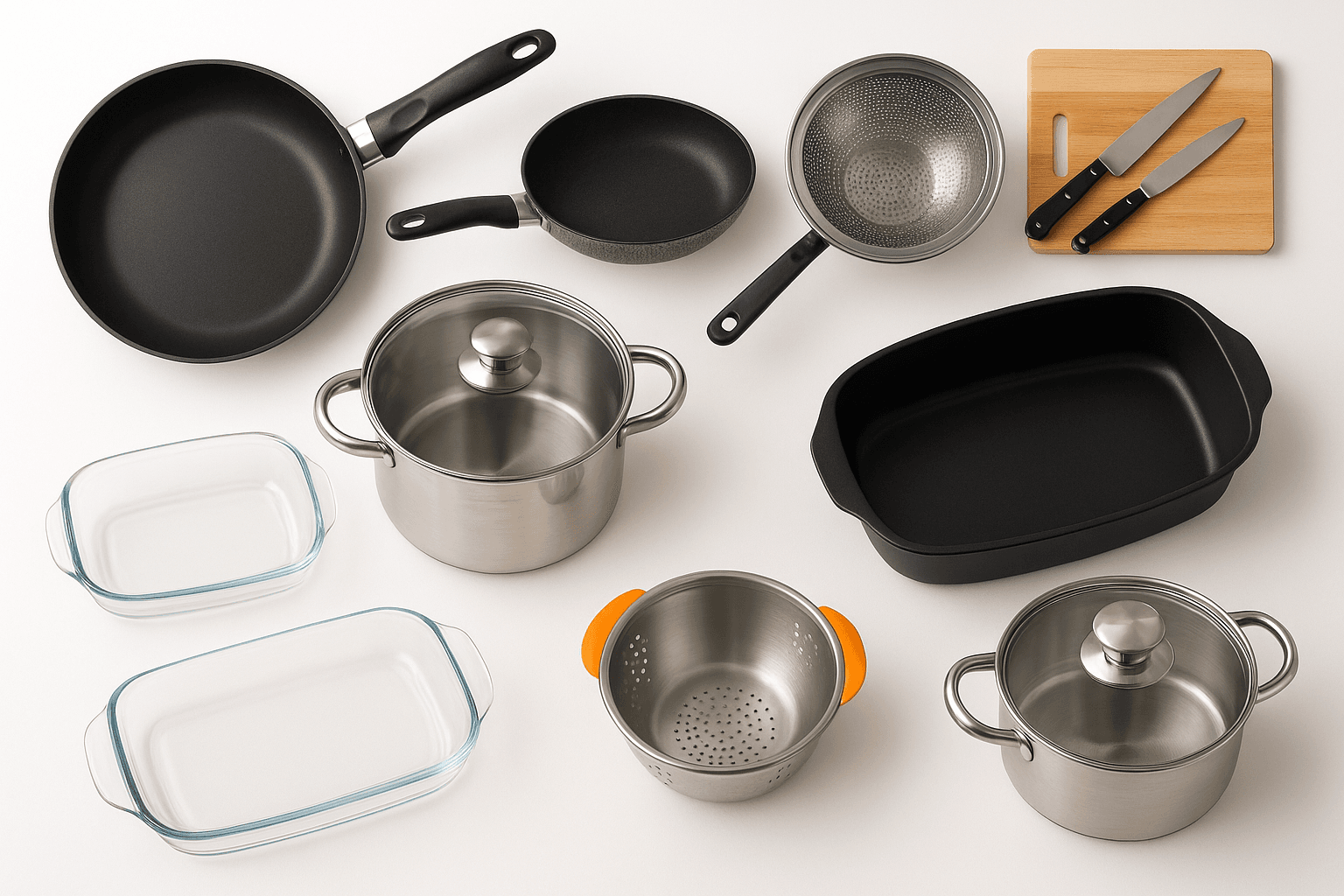
Complete guide to choosing safe, non-toxic cookware in Australia
Years ago I used to think cookware was just cookware. You know—pick something that works, doesn't stick too much, fits your budget, and you're done. But after looking into how different materials behave when they heat up and what they might release into our food, I've realized there's more to consider than I initially thought.
The thing is, every material has trade-offs. There's no perfect "non-toxic" option that ticks every single box, and honestly, that's okay. What matters is understanding what you're actually dealing with—the real concerns versus the marketing claims—so you can make choices that work for your family, your cooking style, and your budget.
So let's talk about what's actually going on with different cookware materials, what the research shows (not just what brands want us to believe), and how to build a kitchen setup that reduces unnecessary chemical exposure while still being practical for everyday cooking.
The Problem with "Non-Toxic" Marketing
When you see "non-toxic" written all over cookware packaging, it's worth taking a step back. Everything has some kind of trade-off, and no material is perfectly safe under all conditions. What I've found more helpful is understanding the genuine risks—what actually matters—versus what's just clever marketing designed to make us feel good about a purchase.
The cookware industry loves to use fear-based marketing while simultaneously not being fully transparent about what their products are actually made of. So let's cut through that and look at what you really need to know.
Ceramic-Coated Cookware: Not What You Think
Here's something I didn't realise: most "ceramic" cookware isn't actually ceramic at all.
Those stylish pans marketed as healthy non-stick alternatives? They're typically aluminum or stainless steel with a coating made from something called sol-gel—basically silica and minerals that create a slick surface. It's a synthetic coating, not natural ceramic clay.
And here's where it gets interesting. Research published in Food Additives & Contaminants found that some of these ceramic coatings can release titanium dioxide nanoparticles into acidic foods like tomato sauce, especially as the coating starts to wear down. The European Union actually banned titanium dioxide as a food additive back in 2022 after their food safety authority raised concerns. Australia's food authority looked at the same evidence and concluded it's still safe at current exposure levels—different agencies, different interpretations of the precautionary principle. The science is still evolving, and we don't have all the answers yet.
But beyond the coating ingredients themselves, there's a more practical issue: these coatings just don't last. Most ceramic-coated pans lose their non-stick properties within 1-3 years. You'll notice food starts sticking, the surface looks worn, and suddenly that pan you bought as a "healthy investment" needs replacing. They also can't handle high heat—anything over 260°C will damage the coating, which rules out proper searing or high-heat wok cooking.
If you're using ceramic-coated cookware now, I'm not saying you need to panic and throw it out. But understand it's a short-term solution, not a lifetime purchase. When it starts wearing out, that's your opportunity to replace it with something more durable.
Now, pure ceramic cookware is completely different. Brands like Xtrema make cookware from actual ceramic clay—no metal core, no coatings. It's genuinely non-reactive and chemical-free. The downsides? It's expensive ($200-400+ per piece), heavy, won't work on induction cooktops, and requires some technique adjustments. If you're committed to absolutely chemical-free cooking and don't mind the learning curve, pure ceramic delivers. But it's definitely a specific choice, maybe not for everyone.
For most people looking for genuinely safer non-stick options, I'd honestly skip ceramic-coated altogether and look at well-seasoned cast iron or quality stainless steel with proper technique instead. More on that below.
Stainless Steel: Reliable with Minor Considerations
Quality stainless steel has become one of my go-to recommendations, and for good reason. It's durable, versatile, dishwasher-safe, and doesn't have synthetic coatings that degrade over time.
That said, it's not completely inert. Research from Oregon State University found that stainless steel does leach small amounts of nickel and chromium into food, particularly when you're cooking acidic things like tomato sauce and especially when the cookware is brand new or in prolonged cooking, eg 6-20 hours.
The leaching drops dramatically after the first 6 uses as a protective oxide layer forms on the surface. By the tenth use, they found about 88 μg of nickel and 86 μg of chromium per serving of tomato sauce—which is relatively modest compared to other dietary sources of these metals. For most people, this isn't a concern.
But if you have a nickel allergy or sensitivity (like contact dermatitis from jewellery), you'll want to be aware of this. It doesn't mean you can't use stainless steel, but you might prefer cast iron, enameled cast iron, or pure ceramic instead.
Quality matters here. Look for 304-grade stainless steel, which will be marked as 18/10 (that's 18% chromium and 10% nickel). Multi-ply construction with an aluminum core gives you better heat distribution without the aluminum touching your food.
In Australia, Scanpan Impact ($150-300) and Essteele Per Vita ($180-350) are solid options. You'll also find international brands like All-Clad at Peter's of Kensington, Myer, or David Jones. Yes, it's an investment upfront, but a good stainless steel pan will last 20+ years if you take care of it.
The non-stick trick: Properly preheated stainless steel with adequate oil/fat is nearly as non-stick as coated pans. Heat your pan for 2-3 minutes over medium heat, add your oil or butter, let it heat until it shimmers, then add your food. This makes a huge difference.
Cast Iron and Carbon Steel: Genuinely Chemical-Free Options
If you want truly chemical-free cookware, this is it. Bare cast iron and carbon steel are just metal—no coatings, no synthetic materials, nothing that can degrade or leach questionable compounds.
When you season them properly (building up layers of polymerized oil), they develop a natural non-stick surface. And the more you use them, the better they get. There's something satisfying about that.
Here's an interesting benefit: cooking in cast iron actually increases the iron content in your food. Research in the Journal of Food Science found that spaghetti sauce cooked in cast iron picked up about 2mg of iron per 100g, and applesauce gained about 6mg per 100g—compared to essentially none in glass cookware. For people with iron deficiency, vegetarians, or pregnant women, this can be genuinely helpful.
But there's an important warning for Australians: About 1 in 200 of us has hereditary hemochromatosis—iron overload disorder—and it's particularly common in people of northern European ancestry. This is actually Australia's most common genetic disorder, and it often goes undiagnosed.
If you have elevated ferritin levels (over 300 μg/L), diagnosed hemochromatosis, or a family history of iron overload, avoid cast iron and carbon steel entirely. The iron that leaches into your food is bioavailable, meaning your body absorbs it readily, which will worsen iron accumulation. If you're unsure, it's worth asking your GP for iron studies—it's a simple blood test.
Practical considerations: Both cast iron and carbon steel need hand-washing and occasional re-seasoning. Acidic foods like tomatoes, wine, or citrus can strip the seasoning and create metallic flavors if you're doing long, slow cooking. They're also heavy (especially cast iron), and they need proper preheating for even cooking.
Carbon steel is lighter than cast iron, heats faster, and develops seasoning more quickly. Solidteknics makes carbon steel cookware right here in Sydney with lifetime guarantees ($150-400)—genuinely Australian-made quality, which I love supporting.
For budget-friendly cast iron, Lodge skillets at Bunnings ($40-80) are excellent value and will literally last generations with proper care.
Enameled Cast Iron: Low-Maintenance, But with Caveats
Enameled cast iron gives you the benefits of cast iron—excellent heat retention, oven-safe, great for slow cooking—without the seasoning maintenance. The enamel coating is essentially glass (powdered glass fused at over 760°C), so it's non-reactive and won't leach iron into your food.
You can cook acidic dishes all day without worrying about it. No seasoning required, and you can clean it with regular soap and water. It's convenient, and I understand why people love it.
But here's what you need to know about enamel glazes: they often contain heavy metals. Independent consumer testing using XRF technology (the same method used by safety regulators) has consistently detected lead, cadmium, and antimony in enamel glazes, particularly in brightly colored enamels.
Le Creuset, for example, acknowledges that their brightly colored enamels may contain traces of lead or cadmium, though they maintain their products pass California Proposition 65 leach testing—which measures whether these metals migrate into food at levels considered harmful. That distinction matters: XRF testing shows what's present in the material; leach testing shows what transfers into food during cooking.
There's also been independent leach testing showing increased levels of aluminum, lead, and cadmium in tomato sauce cooked in Le Creuset, particularly in scratched or worn pieces. The Hong Kong Consumer Council found that several enameled cast iron brands released metals that exceeded international safety standards.
Now, I want to be clear: enameled cast iron from reputable manufacturers meets current safety standards, and millions of people use these products without incident. But some of us prefer alternatives based on the presence of heavy metals in the glazes themselves, even if they're not supposed to leach at harmful levels.
If you choose enameled cast iron: Consider white or cream interior enamel, which contains fewer colorant additives than bright colors. Choose neutral exterior colors (white, cream, black) over bright reds, oranges, or yellows. IKEA Vardagen has a strong track record in independent testing. And inspect your pieces regularly—if you see significant chipping or enamel wear, discontinue use.
In Australia, Chasseur is manufactured locally at better prices than European imports ($150-300 vs $300-600+). Available at Peter's of Kensington, Myer, and David Jones. I like supporting Australian manufacturing when it's an option.
The main drawbacks beyond the heavy metal concerns are weight (these are seriously heavy), potential chipping if dropped, and staining on light enamel (which is cosmetic only, doesn't affect safety).
Baking: Glass, Stainless Steel, and Silicone
Borosilicate glass is completely inert—it doesn't leach anything under any circumstances. Look for "PYREX" in uppercase letters to confirm you're getting true borosilicate. Modern lowercase "pyrex" is often made from soda-lime glass, which isn't as durable.
Glass is perfect for baking and food storage that can go straight into the oven. The limitations are that it only works in ovens and microwaves (not stovetop), heats slower than metal, and breaks if you drop it. But it's genuinely safe, budget-friendly ($15-60), and lasts decades.
Stainless steel bakeware is another solid option. Unlike aluminum baking sheets that can leach, stainless steel is non-reactive and durable. The same minor nickel and chromium leaching considerations apply as with stainless steel cookware (see above), but amounts are modest. Works great for roasting vegetables, biscuits and sheet pan dinners. The Low Tox Project (an Australian company) offers stainless steel bakeware as an alternative to aluminum or non-stick. It's dishwasher-safe and lasts decades.
Silicone bakeware is trickier. Very recent research published in the Journal of Hazardous Materials in 2025 found that silicone bakeware releases cyclic siloxanes into food during baking—levels ranged from 680-4,300 μg/g in new bakeware. The positive finding was that this migration decreased by 95% after just three baking uses and continued declining after that.
If you're using silicone, run it through 3-4 empty baking cycles before using it for food to reduce those initial siloxane levels. The long-term health implications are still uncertain since this research is so new. Personally, I stick with glass and stainless steel for baking where I can.
A Quick Word on Non-Stick
Traditional PTFE non-stick (Teflon) has changed—modern versions don't contain PFOA, which was phased out years ago. But "PFOA-free" doesn't mean completely chemical-free. There are questions about the replacement compounds, and we don't have long-term data on them yet. Learn more about PFAS forever chemicals.
If you choose to use non-stick: never heat empty pans, discard when the coating shows wear, keep heat to low-medium only, and consider it a 3-5 year disposable item. For me personally, I don't use non-stick cookware. The materials I've talked about above offer better alternatives without the unknowns.
What I'd Actually Recommend
For most families: Quality 304-grade stainless steel for everyday versatility and proven long-term safety. Scanpan Impact or Essteele ($150-300) will last 20+ years with proper care.
For genuinely chemical-free cooking: Cast iron (Lodge, $40-80) or carbon steel (Solidteknics, $150-400). Budget-friendly, lasts generations, improves with use. Just confirm you don't have iron overload concerns first.
For acidic dishes without maintenance: Enameled cast iron if you're comfortable with the caveats I mentioned. Australian-made Chasseur ($150-300) is perfect for tomato sauces, wine reductions, and slow braises.
For baking: Borosilicate glass (PYREX, $15-60). Genuinely inert and budget-friendly. The Low Tox Project has stainless steel bakeware options too, with some nickel-free choices.
If You're Starting from Scratch on a Budget
You don't need to spend a fortune to build a safer kitchen setup. Here's what I'd suggest for under $300:
- Lodge cast iron 12" skillet ($60-80 at Bunnings) for searing, frying, oven-to-stovetop
- IKEA 365+ stainless steel saucepan and frying pan ($80-120 total) for everyday cooking
- PYREX glass baking dishes ($40-60) for oven use
Total: $180-260 for genuinely lower-tox cookware that lasts years.
This combo covers all your cooking techniques without breaking the bank.
Induction Cooktop Compatibility
Many Australian homes have induction cooktops now. Compatible materials include stainless steel (with magnetic base), cast iron, carbon steel, and enamelled cast iron. Not compatible: aluminum (unless it has a special magnetic base), glass, ceramic, or copper. Quick test: if a magnet sticks to the bottom, it works on induction.
Thinking About Cost-Per-Year
When you're evaluating cookware, consider cost-per-year rather than just the upfront price. A $150 ceramic-coated pan that lasts 2 years costs you $75 per year. A $300 stainless steel pan that lasts 25 years costs $12 per year. Budget cast iron at $60 lasting 50+ years? About $1 per year.
Suddenly that upfront investment looks different, doesn't it?
Dishwasher safety matters too, especially for busy families. Stainless steel and borosilicate glass are dishwasher-safe. Cast iron, carbon steel, and enamelled cast iron need hand-washing (cast iron and carbon steel to preserve seasoning; enamelled to prevent harsh detergent from dulling the finish).
Care Tips That Actually Make a Difference
For cast iron and carbon steel: After washing (hand-wash only, minimal soap), dry thoroughly and rub with a thin layer of oil before storing. This prevents rust and maintains your seasoning. Store in a dry place—moisture is the enemy.
Protect your surfaces: Use wooden, silicone, or bamboo utensils with everything except stainless steel. Metal utensils can scratch ceramic coatings, strip seasoning from cast iron, and damage other surfaces. Only stainless steel can handle metal utensils without consequence.
Your cooking oil matters too: Even the safest cookware becomes problematic with oxidized oils. For high-heat cooking above 200°C, use avocado oil (smoke point 270°C) or ghee (250°C). Save extra virgin olive oil for medium-heat cooking under 190°C—it oxidizes at high temperatures, creating compounds you don't want to consume.
Your Transition Strategy
You don't need to replace everything tomorrow. Start with your most-used pan—probably a 24-28cm frying pan you reach for daily. Replace it with quality stainless steel or cast iron. As your budget allows, add enamelled cast iron for acidic dishes or carbon steel for high-heat cooking. Phase out ceramic-coated or non-stick pieces gradually as they wear out naturally.
This approach spreads costs over time while reducing chemical exposure where it matters most—your everyday cooking.
Where to Buy in Australia
Australian-Made:
- Solidteknics carbon steel: solidteknics.com, Peter's of Kensington
- Chasseur enameled cast iron: Peter's of Kensington, Myer, David Jones
International Brands Available Locally:
- Le Creuset, Staub, All-Clad, Demeyere: Peter's of Kensington, Myer, David Jones
- Scanpan, Essteele: Peter's of Kensington, Myer, House, Harris Scarfe, Kitchen Warehouse
- Lodge cast iron: Bunnings, Big W, camping stores
Budget-Friendly Options:
- IKEA 365+ range: IKEA stores (check ikea.com/au for locations)
- Kmart, Target, Big W: house-brand stainless steel and cast iron
- PYREX glass: major supermarkets, department stores, kitchenware shops
Online Specialists:
- Kitchen Warehouse (kitchenwarehouse.com.au)
- Peter's of Kensington (petersofkensington.com.au)
- The Low Tox Project (thelowtoxproject.com.au)
The Bottom Line
This isn't about achieving a perfectly "non-toxic" kitchen overnight. It's about making informed choices that reduce unnecessary chemical exposure while keeping cooking practical and enjoyable.
For most families, quality stainless steel for daily use combined with cast iron or carbon steel for high-heat cooking and glass for baking provides an excellent balance. If you have specific concerns—nickel sensitivity, iron overload—you can adjust accordingly.
Start with one quality piece in the material that suits your cooking style and build from there. Every thoughtful swap toward safer materials is a step forward, and that's what matters.
References
- Golja, V., et al. (2017). Characterisation of food contact non-stick coatings containing TiO2 nanoparticles. Food Additives & Contaminants: Part A, 34(3), 421-433.
- European Food Safety Authority (EFSA). (2021). Safety assessment of titanium dioxide (E171) as a food additive. EFSA Journal, 19(5), 6585.
- Kamerud, K.L., et al. (2013). Stainless steel leaches nickel and chromium into foods during cooking. Journal of Agricultural and Food Chemistry, 61(39), 9495-9501.
- Cheng, Y.J., & Brittin, H.C. (1991). Iron in food: Effect of continued use of iron cookware. Journal of Food Science, 56(2), 584-585.
- Allen, K.J., et al. (2008). Iron-overload-related disease in HFE hereditary hemochromatosis. New England Journal of Medicine, 358(3), 221-230.
- Zhu, J., et al. (2025). Silicone bakeware as a source of human exposure to cyclic siloxanes. Journal of Hazardous Materials, 497, 139591.
- Hong Kong Consumer Council. (2021). Cast iron cookware testing report.
This guide presents current research but doesn't constitute medical advice. Individuals with specific health conditions should consult healthcare providers. Product formulations and safety standards change over time—verify current information when purchasing.